IT IS GOOD FOR US TO BE HERE

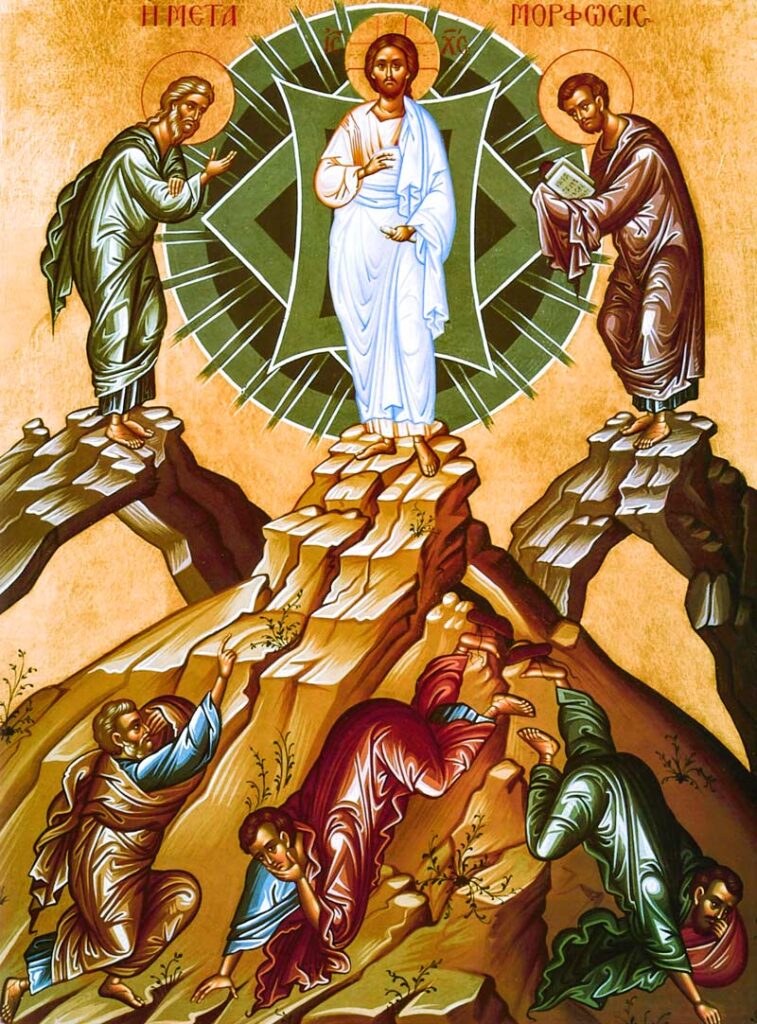
All three Synoptic Gospels tell us of the Transfiguration of Jesus (Matthew 17:1–8, Mark 9:2–13, Luke 9:28–36). Jesus is on the Mount of Olives with his friends. They witness him start to glow with beams of light. Moses (the giver of the Law) and Elijah (the great Prophet) appear with him. The voice of God extolls Jesus as the beloved Son. In fear and awe, the apostles want to set up tents and stay, for they proclaimed “It is good for us to be here.” Jesus, however, knew. We cannot linger too long in moments of glory. We are called to mission. It is our task to bring God’s glory to the entire world.
We celebrate this moment when Christ is glorified. We can be tempted to want to stay focused on that one moment because being in that moment is good. It is important for us to also remember that in the time after this glorious moment Jesus was facing a period much suffering, abuse, ridicule and degradation. Through it all, he did not forget who he truly was, the beloved Son of God. This moment of glorification must have been a source of comfort and certainty for Jesus and his followers as they endured the coming suffering and tribulations. This narrative can provide us with some key understandings for our own lives.
My experience of life has taught me that there is a kind of undulation from moments of glory, accomplishments that move into challenge, tribulation and suffering and back up to glory again. Our moments of glory can include school graduations, weddings, the birth of children. The list goes on. In those moments, we can be deeply aware of the presence of God in our lives and reminded of how we are gifted as children of the Most High God. But during times of challenge and suffering that all too often follow the moments of glorification we can be tempted to surrender to the notion that God is absent. What the story of the Transfiguration can offer us is a reminder that we are beloved children of God, who is well pleased with us, and never abandons us.
In our lives, we all know what suffering is. Suffering is an unavoidable part of human existence. Some of us have known, have been subjected to, or are currently living with immense suffering. We, as individuals and as communities, face unimaginable sufferings. We just need to watch the news to know about those who are starving, murdered, abused and systematically murdered in the name of war. All these examples of suffering are part of attempts to dehumanize people until they accept that they are things, not beloved children of God. I see in history many stories of such devastating and dehumanizing attempts. Yet, as Mahatma Ghandi noted, ultimately in history these tyrannies fail. Oppressed and subjugated people rise and resist. I wonder if one key element of their rising is a deep and abiding sense of their lineage as treasured children of God. All attempts to destroy that innate knowledge are for naught. The glory of God rises in people and bids them to join the struggle to build a better world.
On another level, I am sure each of us has known an individual who has suffered greatly in their lives. While we can easily name examples of those who succumbed to the onslaught of sufferings, we can also name people who rose above their sufferings and live in glory, gratitude and joy. These people did not allow abuse, neglect, addictions, etc., to define them as less than they truly are. They are God’s sons and daughters. In them, God is well pleased. I can name almost innumerable examples of such people in my own life. I am astounded with their joyful glory as they become the wounded healers in a broken world. These survivors inspire me to learn in their presence and commit myself to being part of actions that challenge dehumanization on individual, communal and global levels.
The Transfiguration of Jesus is a story of the gift of glory that can sustain us all as we endure sufferings. We suffer with faith that we will rise once again to glory. We remind ourselves always that we are God’s beloved children. We use the moments of glory and joy that come from rising out of and above our suffering. With gratitude, we use what our own struggles have taught us to transform the world.
Michael Way Skinner is a retired Coordinator of Religion, Family Life and Equity with the York Catholic District School Board. He was a contributing author to World Religions: A Canadian Catholic Perspective, and co-authored There Must be a Pony in Here Somewhere (Novalis, 2020) with his wife, Christine Way Skinner. Michael is a public speaker and award-winning educator who is deeply committed to faith as a source for inclusion and justice.