
BEYOND THE SHAMROCK – MORE LESSONS FROM ST. PATRICK

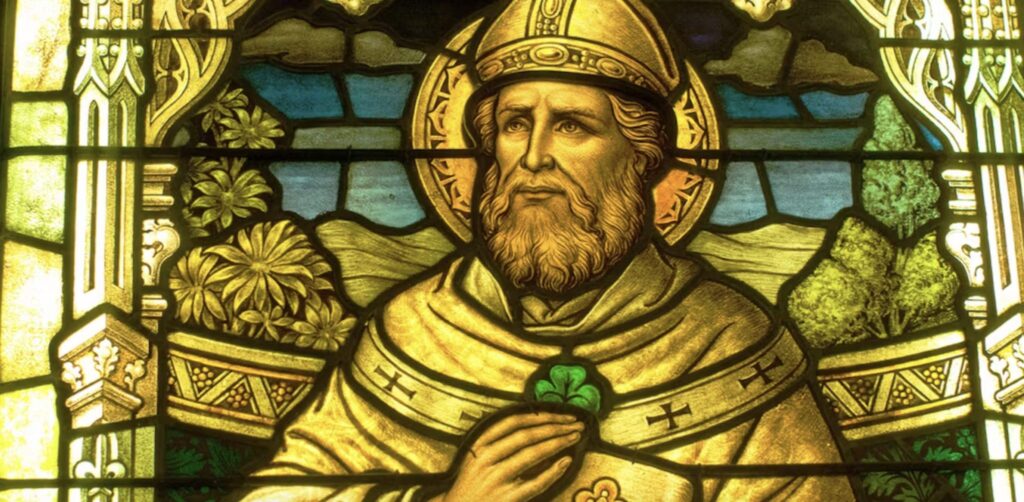
St. Patrick, though the patron saint of Ireland, was born in Britain when the Roman rule of the land was coming to an end – around the end of the 4th century. At the age of 16 he was captured by pirates, taken to Ireland and enslaved to work as a shepherd. For six years he lived outdoors, ill-clothed, underfed and close to despair. Until that point, Patrick had not been a particularly committed Christian, but in his distress, he prayed and prayed. When his prayers were answered and he was able to escape, he returned to his family. Back home again, he studied for the priesthood and was ordained a bishop. One night he had a dream in which he heard of millions of Irish people crying for him to “come back…and walk among us once again.” These were his oppressors! This was the land in which his youth had been stolen. But rather than feed resentment and bitterness, Patrick returned in love as a missionary to the land of his suffering. Today, he is one of Ireland’s most beloved saints. Love, it seems, is stronger than hatred.
Patrick is most famous for teaching about the mystery of the Trinity using a shamrock, but perhaps a deeper look can provide us with some other theological truths.
In thinking about Patrick’s life one might also regard him as a victim of human trafficking – brought to a land against his will to contribute to an economy from which he would reap no benefits. Hundreds of years later, many of the poorest of the poor Irish people, who honoured St. Patrick as their patron, would become economic refugees. Unable to feed themselves in the land of their birth, they would flee to distant lands hoping to build new lives. As is often the case for migrants and refugees, they faced rejection, persecution and more poverty in their new homelands. Today, much of the anti-Irish sentiment has disappeared for the descendants of these migrants (of which I am one). This happened at least in part because of the ones who rejected hatred and opened arms and hearts. It happened because some recognized that in welcoming the stranger, one was welcoming Christ himself.
St. Patrick’s Day is often a lighthearted festival of green beer, leprechauns and shamrocks. That is all well and good. “Joy is,” as Pierre Teilhard de Chardin, SJ noted, “the infallible sign of the presence of God.” So perhaps we might take a few moments in our day, to acknowledge the important lessons we can glean from the life of this saint – the richness of a faith borne of suffering, the radical power of love of enemies, and our own call to welcome the migrant stranger in our day.
Christine Way Skinner is a doctoral student at Regis St. Michael’s at the Toronto School of Theology and has been a lay pastoral minister for more than 30 years. Together with her husband, Michael, she has parented 6 wonderful children. She has written a number of books for Novalis on living the Catholic faith for both adults and children.

Thank you! That was a beautiful and moving reflection!